
MICU
Mineral Investigation Camera using Ultra-Violet
Our Way to the Moon
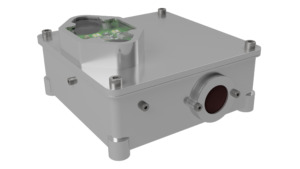
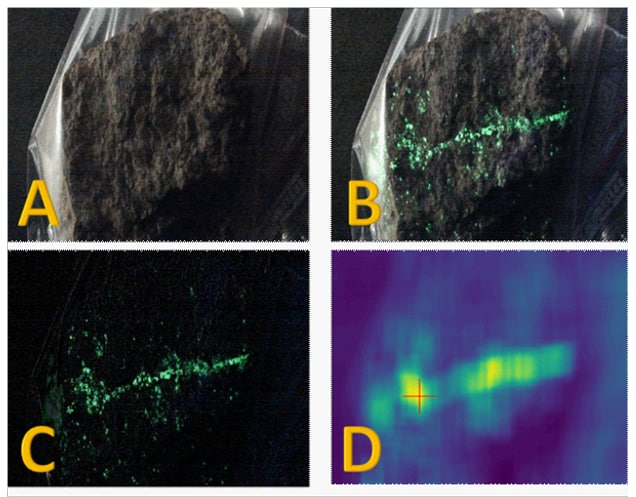
In 2018, KSat conquered the ISS with PAPELL, in 2019 the atmosphere with BUBBLE, and with SOURCE we will conquer orbit. But that’s not enough. With our latest project, MICU, we are setting our sights on the next biggest goal: the Moon. MICU (Mineral Investigation Camera using Ultra-Violet) is an experimental module (payload) with which we intend to achieve this. In April 2020, NASA launched the so-called “Honey, I shrunk the Payload” challenge for a payload on a small lunar rover that will operate in an as-yet-undetermined lunar region. This is being carried out as part of the Artemis mission, in preparation for the crewed lunar missions starting in 2024. The focus of the competition is on the discovery and characterization of lunar resources. MICU will use ultraviolet (UV) radiation from LEDs to make lunar rocks fluoresce, which we will then detect with a camera. The onboard image processor analyzes the images for potential fluorescence. The most promising images are then released for downstream transmission to Earth for further mineral classification. The challenge is divided into two phases. In Phase 1, we prevailed against more than a hundred other ideas, securing second place and $15,000 to further develop our concept. Despite the adverse conditions caused by Covid-19, we have been working diligently and ambitiously on our project over the past few weeks, aiming to submit our revised proposal for Phase 2 in early January. Now we eagerly await the possibility of exploring the moon with MICU on a miniature lunar rover. The entire team continues to work on MICU in parallel. Currently, the team consists of 24 members divided into four teams. The Science team focuses on the fluorescence of minerals; the Electronics and Mechanics teams design the hardware-specific and structural components based on the Science team’s requirements. The Software team develops the operating system and a mineral map—essentially a database of fluorescent minerals. We can create the database with the support of the Stuttgart Natural History Museum. This will allow us to compare the images of the moon with those in our database.
MICU at a glance
Honey, I shrunk the NASA Payload
NASA’s Jet Propulsion Laboratory in Southern California held a public competition to develop miniaturized payloads for future lunar missions. The challenge, “Honey, I Shrunk the NASA Payload,” seeks instrument designs that can support a sustainable human presence on the Moon, demonstrate the utilization of resources found there, and enable new scientific discoveries. Future exploration of the Moon and beyond will require tools of all shapes and sizes—from large orbital probes to tiny rovers. In addition to the currently planned scientific rovers, NASA could one day send even smaller rovers to better explore the lunar surface. These small robots would provide mission flexibility and gather vital information about the lunar surface, its resources, and the environment. The data collected by these rovers would be invaluable for future lunar projects and NASA’s Artemis program.

Curious?
Want to know more about the competition
“Honey, I shrunk the NASA Payload”?
Fluoreszenz
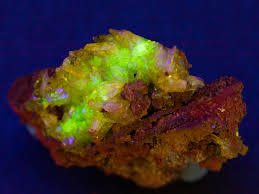
When minerals are irradiated with ultraviolet light, it can be observed that some mineral samples glow more or less intensely in a variety of colors. This phenomenon is called fluorescence.
Fluorescence was first observed in fluorite – a calcium fluoride (hence the name). Fluorescence begins immediately upon excitation by the light source and ends with it (in contrast, phosphorescence is a lingering glow). Daylight fluorescence refers to fluorescence caused by the UV component of natural light, which, for example, makes some fluorites appear differently colored under natural versus artificial light.
We want you!
Has MICU sparked your interest? We are always looking for new members!
Whether you are just starting your first semester or are already an aerospace expert, and regardless of what you are studying, we can find an exciting position for everyone in our team. All of our projects are organized into subsystems that are responsible for different areas. If you already know what you are interested in, please contact us!
Participation in MICU is no longer possible due to the completion of the project, but there are always subsequent projects that you can join.
Gallery
Supporters und Sponsors