SOURCE
Stuttgart Operated University Research CubeSat for Evaluation and Education
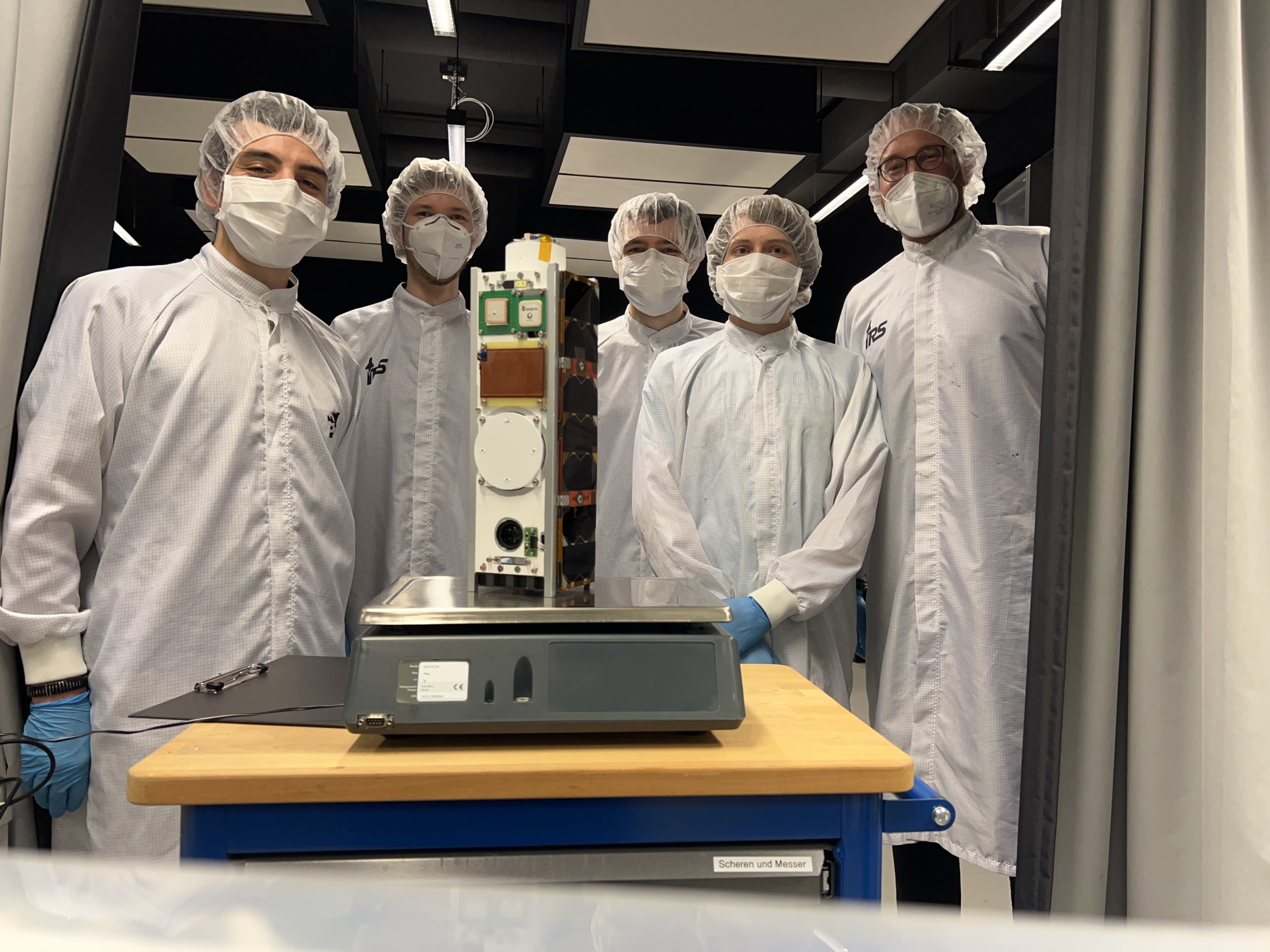
SOURCE (Stuttgart Operated University Research CubeSat for Evaluation and Education) is a nanosatellite measuring 10 x 10 x 36 cm, conforming to the 3U+ CubeSat standard. It is being developed in a collaboration between KSat e.V. and the Institute of Space Systems (IRS) at the University of Stuttgart. As a student-run CubeSat, it is developed and operated exclusively by students under the supervision of the IRS. Within the “CubeSat Technology Internship” module, many students have the opportunity to gain practical experience over a semester and earn credit points for their work on the project. In addition to project supervision, the IRS offers numerous opportunities for testing and developing components. Furthermore, SOURCE is supported by the ESA’s Fly Your Satellite! program, which enables students to learn development, testing, and documentation according to the standards of the European Cooperation for Space Standardization (ECSS).
SOURCE carries several scientific payloads, divided into two mission phases. For the first phase, two cameras have been integrated into SOURCE. The MeSHCam (Meteor, Star, and Horizon Tracking Camera) is used for meteor observation and as a star and horizon tracker for orientation. Additionally, the smaller color camera PRIma (PR Imager) is on board, which is used for public relations (PR) images of Earth. The second mission phase begins at an altitude of 200 km and investigates the atmosphere during SOURCE’s reentry. This includes FIPEX sensors on the front and rear of the satellite, which measure the atomic oxygen concentration in orbit. Furthermore, heat flux, temperature, and pressure sensors distributed around the satellite collect data about the CubeSat’s environment.
Our Payloads
Mission Phase 1 - Orbit at 500km Altitude

Startracking
SOURCE’s star tracking system represents an innovative method of orientation determination, achieved using a cost-effective, commercially available camera. First, the Meteor, Star and Horizon Tracking Camera (MeSHCam) photographs the night sky in space. The payload’s onboard computer then compares these images with known star patterns to precisely determine SOURCE’s orientation. This use of commercial-off-the-shelf (COTS) components for star tracking is a groundbreaking technology demonstration, showing that inexpensive, off-the-shelf components can meet the stringent requirements of space travel without relying on specialized and more expensive equipment.

Meteor-Detection
The meteor detection payload on board SOURCE aims to observe meteors in the upper atmosphere. The data can enhance our understanding of the origin of the solar system. The MeSHCam is capable of detecting even faint meteors because the light from meteors in orbit is not absorbed by the atmosphere. The use of a commercially available camera for these observations also demonstrates the potential for CubeSats to utilize cost-effective optical systems for scientific studies in space. To distinguish between meteors and background noise, the payload’s onboard computer runs the SpaceMEDAL detection algorithm, developed by students at the University of Stuttgart.

PR Images
The PR Imager (PRIma) camera is also a cost-effective, commercial camera without specific qualifications for use in space. The camera is mounted at a slight angle on the front of the satellite. Unlike the MeSHCam, the PRIma camera has a high-resolution color sensor. This small camera, measuring 3.5 cm x 2.5 cm, can thus produce PR images of the Earth. Each image covers an area of approximately 450 km x 340 km, which corresponds to about 40% of the area of Germany.
Mission Phase 1 - External Payloads

IRAS – Multifunctional Sandwich Structure
SOURCE is the test platform for a 3D-printed, multifunctional sandwich structure (MSS) developed by the German Aerospace Center (DLR) Stuttgart and the Fraunhofer Institute for Manufacturing Engineering and Automation (IPA) within the framework of the Integrated Digital Research Platform for Affordable Satellites (IRAS) project. The IRAS MSS consists of a honeycomb structure made of carbon fibers. At specific points, the structure incorporates tungsten, which protects the electrical circuits from radiation. A small speaker is also integrated, allowing the integrity of the structure to be verified even in space.

Thin-Film Solar Cells
Almost every satellite mission requires solar cells to generate power. Therefore, reducing the weight of these cells would offer significant advantages for many missions. The DLR Institute of Space Systems is thus investigating the performance of thin-film solar cells on the SOURCE satellite. In addition to saving mass, these cells also offer the advantage of being flexible: this allows more solar cells to be packed into a small space during launch before they are deployed in space. On SOURCE, the thin-film solar cells are mounted on the top surface, directly next to the satellite’s main solar cells.
IRAS SmartHeater
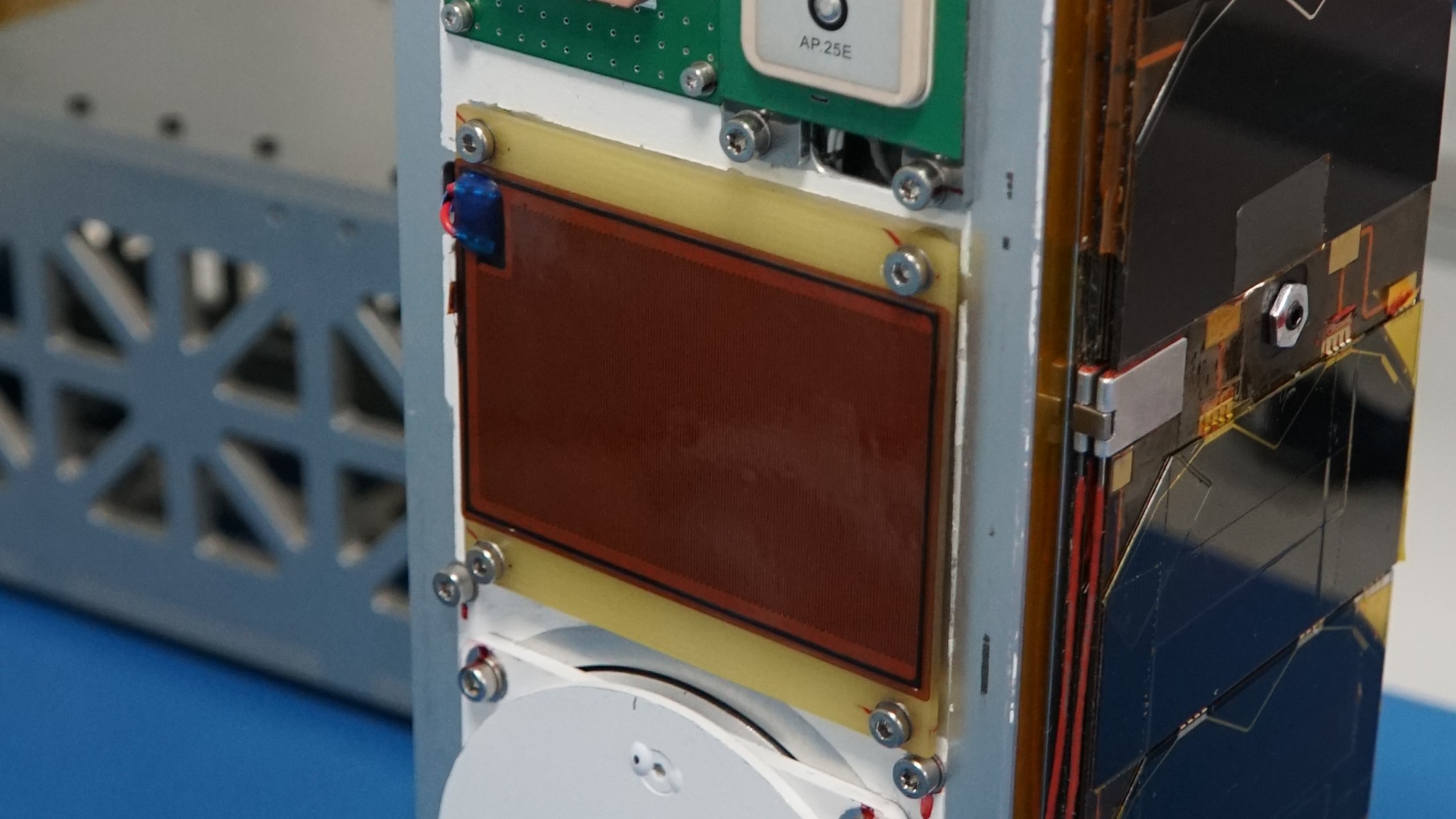
In cooperation with Airbus Defence & Space through the IRAS project, a SmartHeater is being integrated into the SOURCE satellite. This component automatically heats up to a fixed temperature when voltage is applied. This eliminates the need for temperature sensors or a control algorithm on the satellite. The thermal system thus becomes much more robust against software errors. Furthermore, unlike conventional heating elements, the SmartHeater incorporates a continuous matrix. Therefore, even localized damage does not impede the SmartHeater’s operation.
Mission Phase 2 - Reentry from an altitude of 200km

Reentry
SOURCE’s Re-Entry Measurement Payload is designed to investigate the conditions during CubeSat re-entry into Earth’s atmosphere. This includes pressure, temperature, and heat flux measurements. The sensor data will enable the development of improved material models for satellites, leading to better predictions of re-entry events. Furthermore, future satellites can be designed according to the “Design for Demise” principle. This helps prevent hazardous debris from falling to Earth instead of burning up completely in the atmosphere.

Atomic Oxygen
Another component of the reentry sensor suite is the Flux Phi Probe Experiment (FIPEX) system. One sensor is mounted on the front and one on the back of SOURCE. These sensors are heated to 800°C to determine the concentration of atomic oxygen in the surrounding environment. Atomic oxygen is highly reactive and therefore causes severe corrosion on all exposed surfaces. This particularly affects solar cells, causing a continuous decrease in power output over the mission. Therefore, accurate models for predicting the concentration in a satellite’s orbit are crucial. SOURCE is well-suited to complement these models.
SOURCE Subsystems
Project Leads
The student project leads keeps track of everything. Whether it’s the schedule, team events, funding, or public relations: all the threads come together here. The project management team is supported by staff from the Institute of Space Systems.
Systems Engineers
Mechanical, electrical, and data interfaces between subsystems are coordinated by the system engineers. This includes managing mass and power budgets. Furthermore, the system engineers plan all necessary tests. In addition, all test documentation is checked against the internal test standard to ensure high quality.
Payload
This subsystem develops and tests all in-house payloads. The team is divided into two groups: The first group focuses on the camera system. This includes both camera characterization and software development for the payload’s onboard computer. The second group develops the reentry sensors. While these are commercially available off-the-shelf (COTS), they are controlled via custom-designed circuit boards. At the heart of these boards is a radiation-resistant Vorago microcontroller that also collects data during reentry. The payload subsystem is also responsible for integrating external payloads and the FIPEX payload.
Structure, Thermal & Harness
Attitude Control System
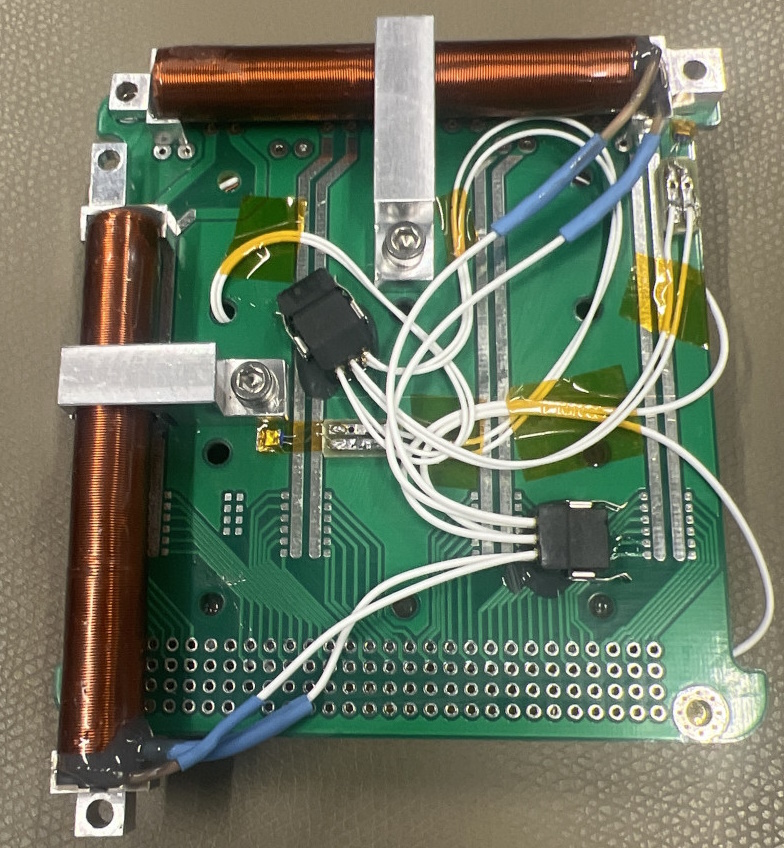
The Attitude Control System (ACS) is responsible for determining and controlling the orientation of SOURCE. GPS, sun sensors, magnetometers, and gyroscopes are integrated into the satellite to determine its position and orientation. After processing the data using a Kalman filter, the subsystem controls SOURCE’s orientation depending on the mission phase: After ejection from the rocket, SOURCE is stabilized and the solar panels are aligned with the sun. In normal operation, the cameras can be rotated to their desired directions. During reentry, the ACS subsystem attempts to keep the satellite stable for as long as possible. To accomplish this, SOURCE uses three magnetorquers that align themselves with the Earth’s magnetic field, thus rotating the satellite. These magnetorquers were designed and built by students.
Onboard Data Handling & Software
The Onboard Data Handling and Onboard Software Subsystem is the central control system, monitoring the satellite’s status, storing telemetry data, and executing commands. It is based on an iOBC with a 400 MHz ARM9 processor and multiple memory modules, as well as interfaces to ensure communication with other subsystems. Its main tasks include data storage, transitions between operating modes, processing control algorithms, and fault detection. The software utilizes the FreeRTOS real-time operating system and the Flight Software Framework (FSFW), which was developed specifically for space applications by the Institute of Space Systems at the University of Stuttgart.
Electrical Power System
The Electrical Power System is responsible for energy generation, storage, and distribution to other subsystems. It features a custom-designed solar cell configuration with 56 solar cells, generating up to 32W of power. This power is stored in an 86Wh lithium-ion battery from GomSpace. The custom-designed Power Conditioning and Distribution Unit (PCDU) then generates all required voltage levels, which are subsequently distributed to other subsystems via 32 individually switchable outputs. A radiation-resistant Vorgao microcontroller controls the entire process. To maximize the solar panel output, Maximum Power Point Tracking (MPPT) is performed onboard. Redundant and fail-safe components are incorporated to ensure mission reliability.
Communications
The communications subsystem performs three main tasks: receiving control commands, sending status information, and transmitting payload data. Control commands and status information are particularly critical, as erroneous commands can endanger the satellite. During nominal operation, SOURCE communicates directly with the ground station in the S-band (2–2.4 GHz). Data is transmitted according to CCSDS standards with error-correcting algorithms. Since reentry does not occur directly above a ground station, SOURCE can access the commercial Iridium satellite network via the L-band (1.6 GHz) to transmit data regardless of its position. This system can also be used as a backup during the initial mission phase.
Operations & Ground
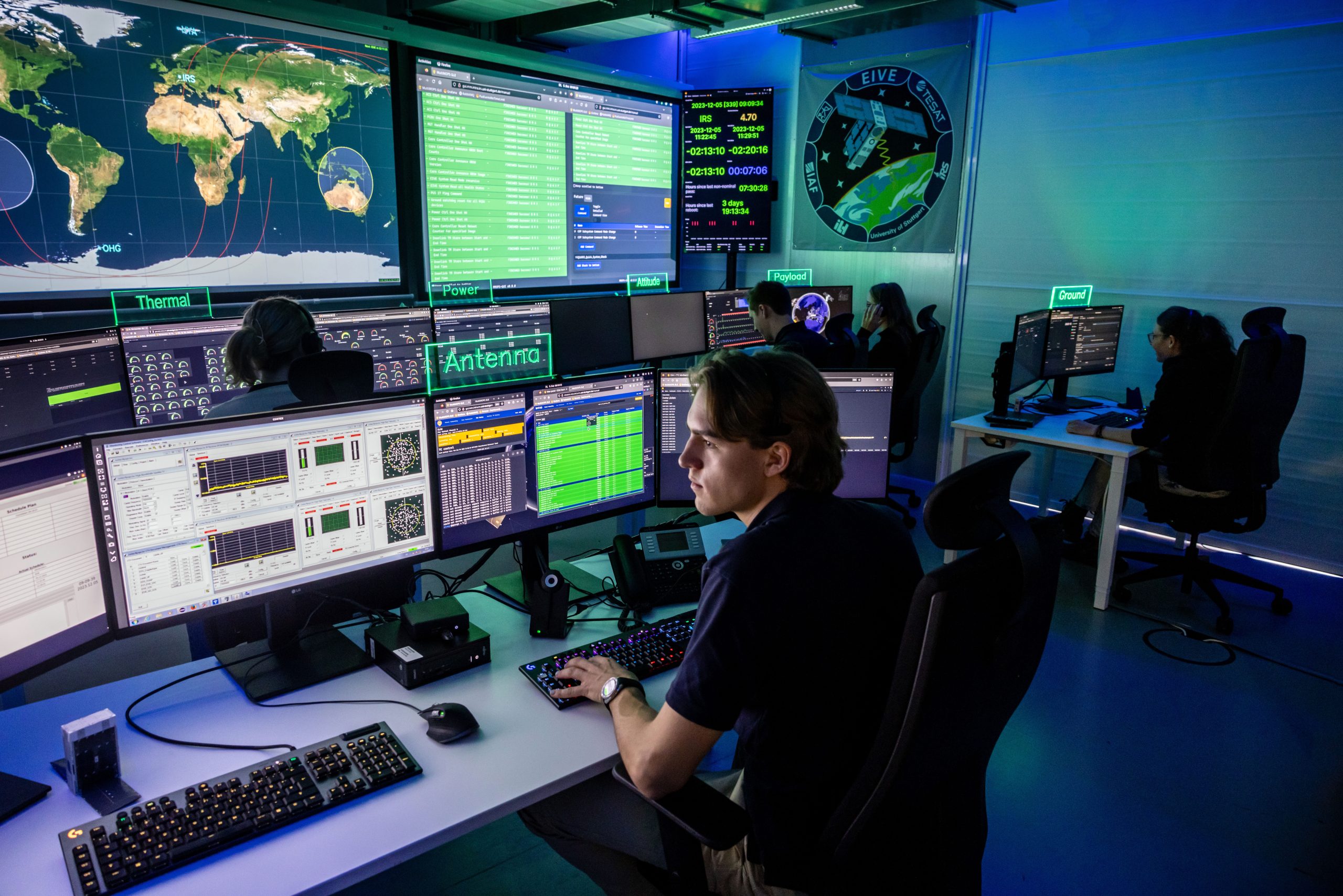
The Operations & Ground Subsystem of SOURCE is responsible for the planned control of the satellite and the establishment of the ground infrastructure. This includes the IRS ground station, the mission control system, and a mission planning tool with a flight dynamics tool. The existing ground station software must be adapted and automated for SOURCE to facilitate future satellite control. OPS&GND also creates the user manual, develops a satellite database for communication, and is responsible for creating and testing operational procedures. In close cooperation with all other subsystems, critical training for launch and the early orbital phase is prepared and conducted.
Simulation & Testbed
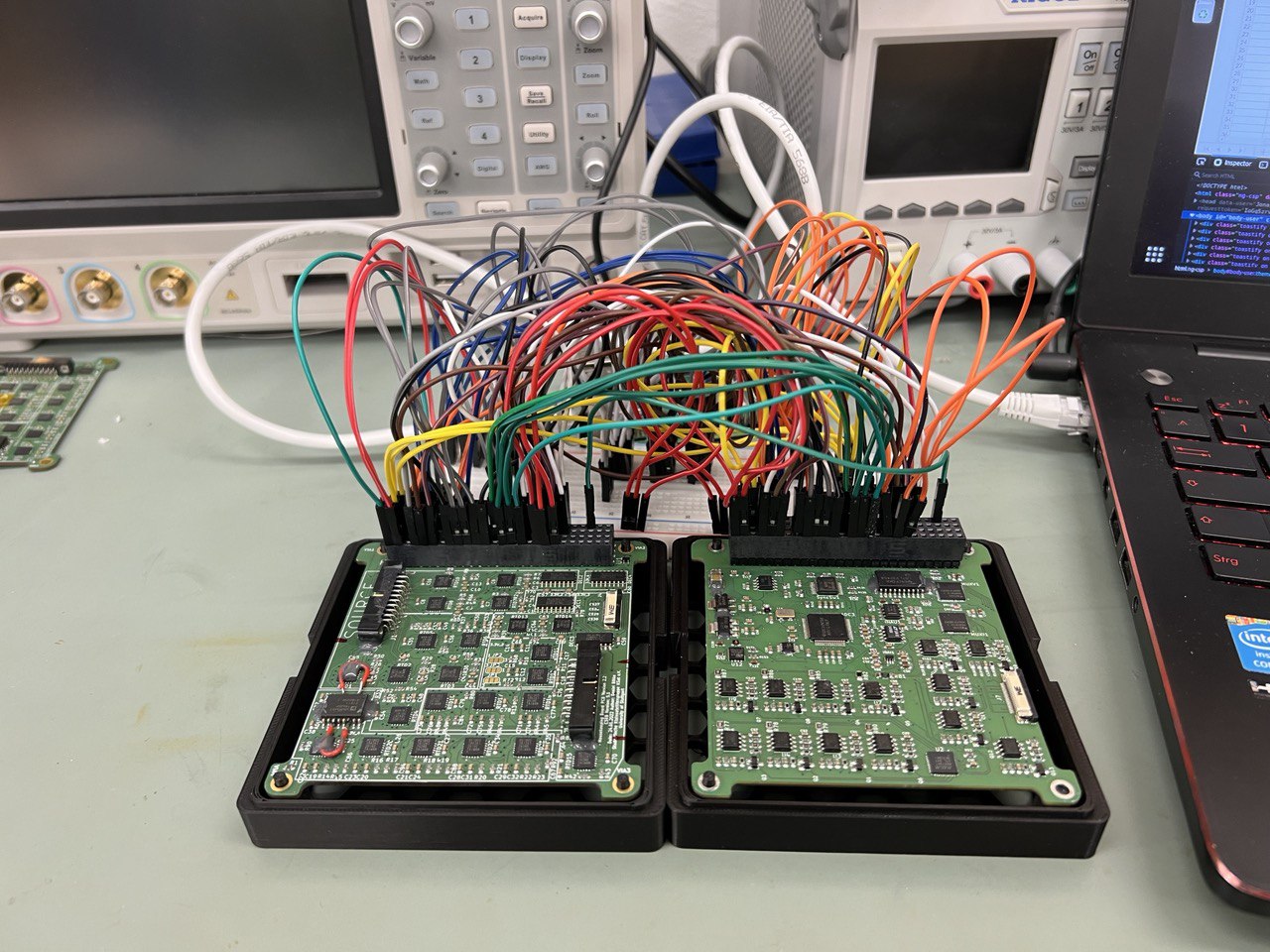
To test the software of the onboard computer (OBC), the Simulation and Testbed Subsystem is developing a simulator that can send artificial data to the OBC. This allows the software’s response to any scenario to be tested. This increases robustness and makes SOURCE safer in orbit. The subsystem also manages the “FlatSat”: Here, all satellite components are laid out on a table and then electrically connected. Exposing all connections significantly simplifies troubleshooting.
We want you!
Has SOURCE sparked your interest? We are always looking for new members!
Whether you are just starting your first semester or are already an aerospace expert, and regardless of what you are studying, we can find an exciting position for everyone in our team. All of our projects are organized into subsystems that are responsible for different areas. If you already know what you are interested in, please contact us!
Participation in SOURCE is voluntary or possible as part of the related SQ internship CubeSat Technology, provided you are studying at the University of Stuttgart. SQ participation is also possible within the framework of our projects SOURCE-2 and ATHENE. Participation is worth 3 ECTS credits.
Fly Your Satellite!

Curious?
The Fly Your Satellite! program regularly offers the opportunity to support student teams in the development of their satellite.
It’s worth visiting the ESA website to get the latest updates on this!
Timeline
Beginning of the SOURCE Project
Following the success of the Flying Laptop (FLP), the small satellite association KSat e.V. and the Institute for Space Systems IRS of the University of Stuttgart decide to build a CubeSat.
PRR (Preliminary Requirement Review) and beginning of Phase B
At the University of Stuttgart, the students of the SOURCE team present the precise parameters of the mission. This concludes Phase A, the mission analysis, and begins Phase B, the definition phase.
PDR (Preliminary Design Review) and beginning of Phase C
More than 70 reviewers, including members of Tesat-Spacecom, Thales Alenia Space, Airbus, the German Aerospace Center (DLR) in Bremen, and partner spaceflight groups, evaluated the presented preliminary design of SOURCE. The reviewers agreed that SOURCE could proceed to Phase C, in which the final design will be developed through iterative testing of units.
Fly Your Satellite tender
The European Space Agency (ESA) is publishing the call for proposals for the third round of the "Fly Your Satellite!" program, which aims to support university students in the development and launch of CubeSats.
SOURCE selection for Fly Your Satellite
The SOURCE team participates in the selection workshop at the ESTEC research center in the Netherlands and is selected as one of four projects to participate in the "Fly Your Satellite! 3" program.
Completion of the CDR (Critical Design Review)
The review board of the "Fly Your Satellite!" program confirms the quality and completeness of the SOURCE design, thus enabling the transition to the integration phase.
Start of Phase D – Integration and Testing Phase
SOURCE enters Phase D, in which the satellite's hardware is built, tested, and assembled into a complete system.
Construction of the structural model and system-wide shaker tests
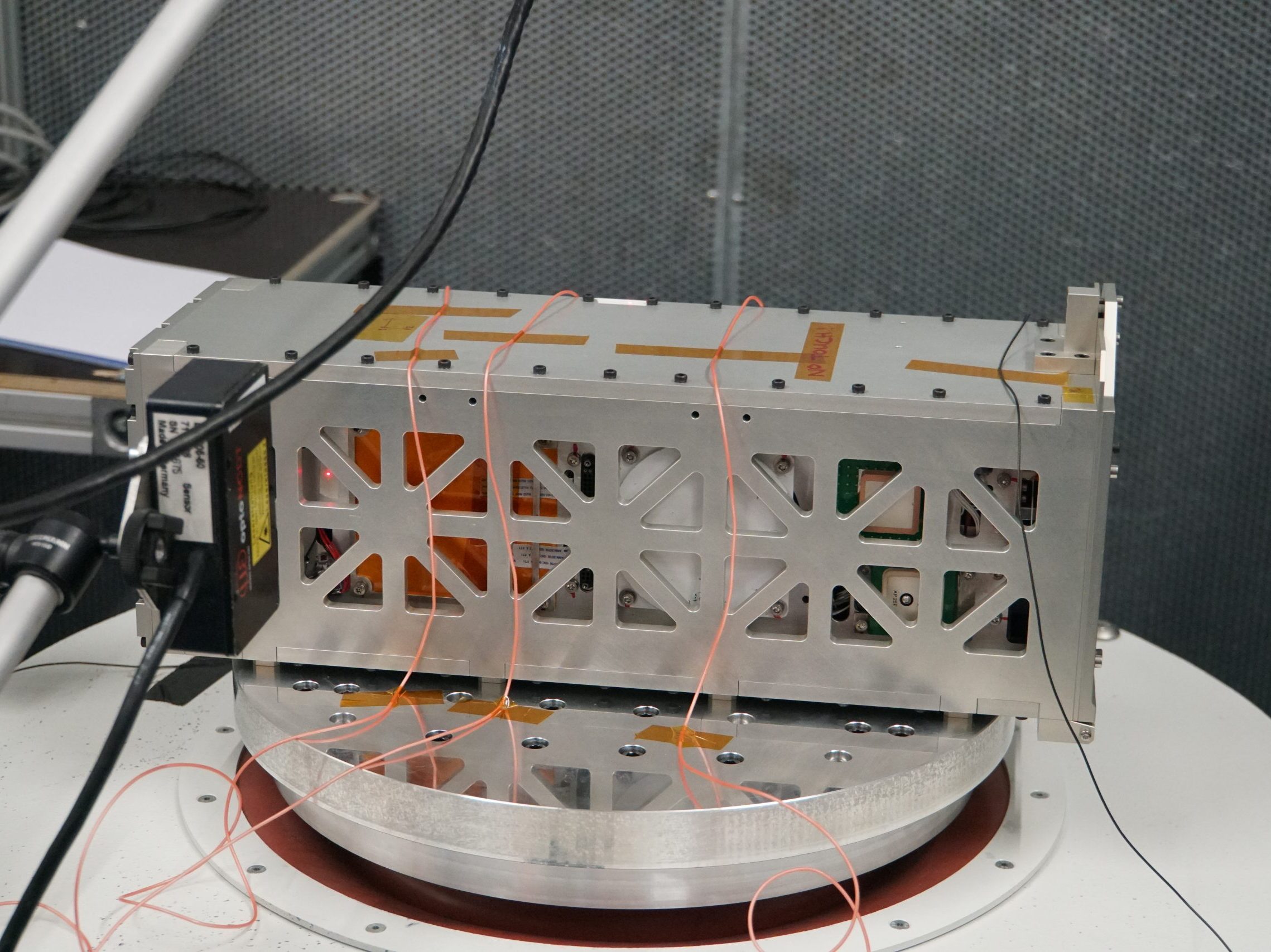
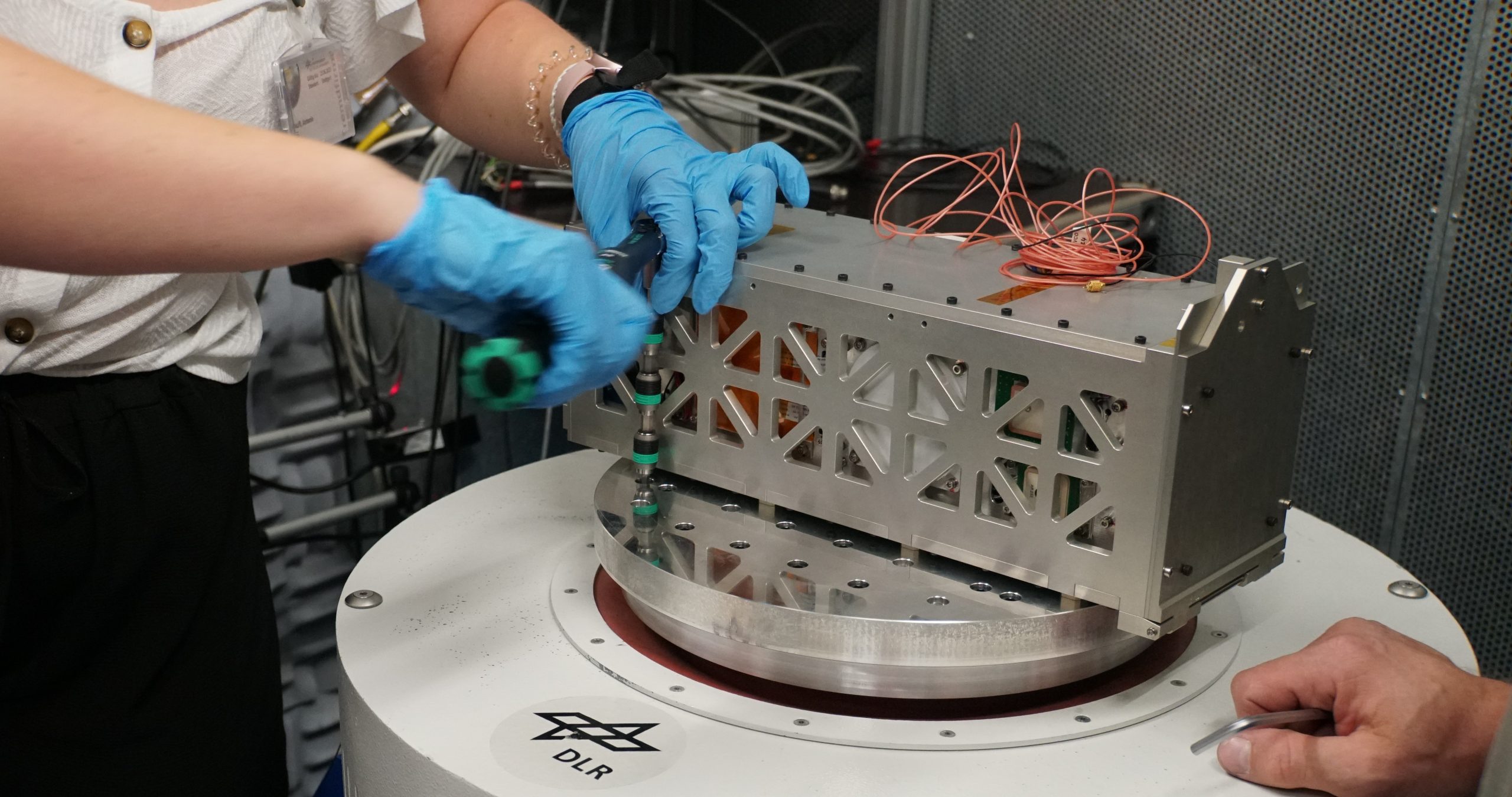
From January to March, SOURCE will undergo its first full integration. The goal is to qualify all units in a shaker test of the entire system. After the test campaign, SOURCE will be fully qualified to withstand the stresses of launch on a rocket.
Conducting the MRR (Manufacturing Readiness Review)
The "Fly Your Satellite!" program team thoroughly checks the qualification of all components. After the review, it's clear: The SOURCE team can begin manufacturing the flight hardware.
Planned launch of the SOURCE satellite
The launch of the SOURCE satellite is scheduled for early 2026, although the exact date depends on the availability of the carrier and other factors.



Gallery
Partners




Sponsors




Supporters